


 경인행정학회
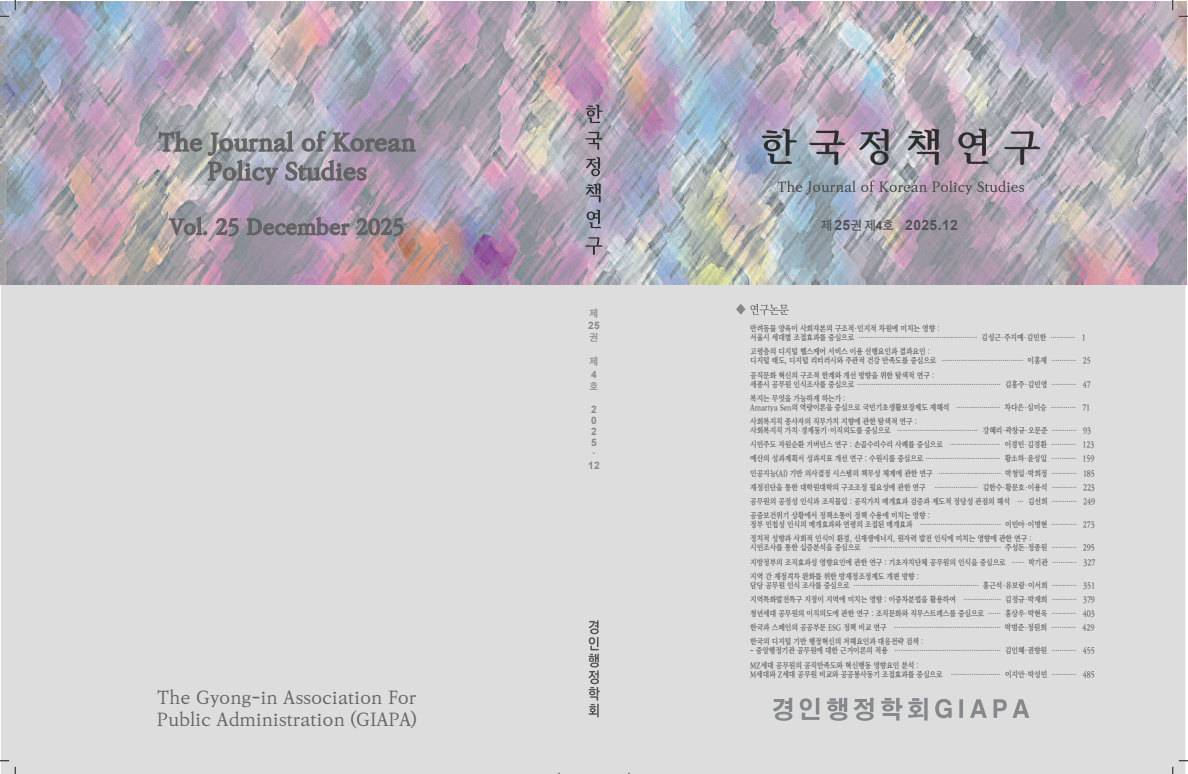
고령층의 디지털 헬스케어 서비스 이용 선행요인과 결과요인: 디지털 태도, 디지털 리터러시와 주관적 건강 만족도를 중심으로
Antecedents and Consequences of Digital Healthcare Service Use Among the Elderly: Focusing on Digital Attitude, Digital Literacy, and Satisfaction with Subjective Health
저자
이홍재(안양대학교)
Lee, Hong Jae
Lee, Hong Jae
- 창간연도
- 2002년 2월
- ISSN
- (Print)1598-7817 , (Online)2713-6744
- 등재사항
- KCI등재(2019.01 ~ 현재)
- 수록권호
- 제25권 4호
- 발행일
- 2025.12
- 수록논문
- 19 articles
- 유형
- 학술저널
- 주제
- 사회과학
- 발행기간
- 2002.02 ~ 2025.12
- 발행주기
- 연 4회(계간)
- 총 권호 수
- 78 volumes
- 총 논문 수
- 771 articles
키워드
초록
본 연구는 고령자의 디지털 태도, 디지털 리터러시, 디지털 헬스케어 서비스 이용, 주관적 건강 만족도의 구조적 관계를 분석하였다. 선행연구를 통해 변인 간의 관계에 관한 가설을 설정하고, 『2024 디지털 정보격차 실태조사』 자료를 활용하여 가설을 검증하였다. 디지털 헬스케어 서비스 이용의 선행요인에 관한 가설검증 결과, 고령자의 디지털 태도는 디지털 리터러시에 긍정적인 영향을 미치는 것으로 나타났다. 고령자의 디지털 태도는 디지털 헬스케어 서비스 이용에 유의한 영향을 미치지 않는 것으로 나타났지만 디지털 리터러시는 긍정적인 영향을 미치는 요인으로 분석되었다. 또한 디지털 헬스케어 서비스 이용은 고령자의 주관적 건강 만족도에 정(+)의 효과가 확인되었다. 디지털 태도와 주관적 건강 만족도의 관계에서 디지털 리터러시와 디지털 헬스케어 서비스 이용이 긍정적인 매개효과가 있음을 확인할 수 있었다. 이러한 분석결과를 토대로 고령자의 디지털 헬스케어 서비스 이용의 접근성과 편의성 제고, 디지털 헬스케어 조력 및 개인의 요구(needs)를 고려한 맞춤형 헬스케어 서비스 지원 등의 정책적 시사점에 대해 논의하였다.The purposes of present study is to analyze the structural relationships between older adults' digital attitude, digital literacy, digital healthcare service use, and subjective health satisfaction, and to suggest theoretical and policy implications. Based on a review of previous research, a hypothesis was developed regarding the relationships between these variables, which was tested using structural equation modeling with data from the '2024 Digital Divide Survey'. The hypothesis testing results concerning the antecedents of digital healthcare service use showed that older adults' digital attitude had a positive effect on digital literacy. While older adults' digital attitude did not significantly affect digital healthcare service use, digital literacy was found to be a factor that had a positive effect. And the results indicated that older adults' use of digital healthcare services had a positive (+) effect on their subjective health satisfaction. Additionally, the results of the mediation analysis showed that digital literacy and digital healthcare service use positively mediated the relationship between digital attitude and subjective health satisfaction. Based on these analysis results, theoretical and policy implications for improving older adults' subjective health satisfaction through the use of digital healthcare services were discussed.
목차
Ⅰ. 서론Ⅱ. 이론적 배경
Ⅲ. 연구방법
Ⅳ. 분석결과
Ⅴ. 결론 및 함의
참고문헌 (46)
- 고대선. (2021). 고령자를 위한 스포츠 웨어러블 디바이스 이용의도에 미치는 요인 탐색. 「한국웰니스학회지」, 16(3): 149-155.
- 과학기술정보통신부⋅한국지능정보사회진흥원. (2025). 「2024 디지털 정보격차 실태조사」. 대구: 한국지능정보사회진흥원.
- 관계부처합동. (2023). 제3차 보건의료기술육성기본계획. 세종: 보건복지부.
- 구 슬⋅조주희⋅안은미⋅조승연⋅박현영. (2016). 노령층에서의 건강정보이용 현황 조사 연구: 성별 및 지역에 따른 건강정부이용 경로와 신뢰 정도 분석. 「보건사회연구」, 36(2): 454-479.
- 권기대. (2022). 디지털 헬스케어에 대한 국민 인식 조사. 「디지털콘텐츠학회논문지」, 23(3): 551-558.
- 김담율⋅김종흠. (2025). 고령층의 디지털 헬스케어 제품 및 서비스 이용에 영향을 미치는 요인에 관한 탐샘적 연구. 「소비자학연구」, 36(4): 69-105.
- 김영선⋅신혜리⋅엄사랑⋅차은교. (2024). 디지털헬스케어의 고령자 기술수용모델 검증. 「한국융합과학회지」, 13(6): 317-337.
- 김예원⋅한세미⋅김기성. (2018). 중고령층의 디지털 헬스케어 서비스 사용의도 결정요인에 관한 연구. 「정보사회와 미디어」, 19(3): 1-23.
- 김유나⋅변은지. (2021). 고령층 디지털 정보 역량과 디지털 정보 활용 영향요인에 관한 연구. 「디지털융복합연구」, 19(3): 89-97.
- 김종환⋅강인기. (2024). 고령층 디지털 헬스케어 활용 위한 디지털 리터러시 정책 방향 연구. 「스포츠엔터테인먼트와 법」, 27(2): 3-25.
- 김효정⋅이진명. (2018). 시니어 소비자의 모바일 디지털정보 활용의 결정요인. 2차적 디지털 격차를 중심으로. 「가족환경연구」, 56(6): 493-506.
- 문세연⋅윤영미⋅한태화⋅이상은⋅장혁재⋅송시영⋅김현창. (2017). 디지털 헬스케어 서비스에 대한 일반인의 인식. 「디지털콘텐츠학회논문지」, 18(4): 621-629.
- 박나영⋅윤난희⋅박남수⋅김영복⋅곽민선⋅장사랑. (2022). 인터넷 건강정보활용능력(eHwalth literacy)에 따른 디지털 헬스케어 이용경험: 서울시민을 중심으로. 「보건교육건강증진학회지」, 39(4): 67-76.
- 박노일⋅정지연. (2022). 고령자 1인 가구의 디지털 리터러시와 온라인 커뮤니티 및 사회참여: MZ세대 및 고령자 1인-다인 가구 집단 비교를 중심으로. 「한국소통학보」, 21(2): 281-318.
- 박철형⋅김종광⋅윤소미. (2023). 모바일 헬스케어 사용자의 디지털 기기 사용 수준에 따른 건강지표 비교 및 참여요인 분석. 「한국체육측정평가학회지」, 25(2): 33-41.
- 배영임⋅신혜리. (2020). 기술수용모델(TAM)을 활용한 디지털 헬스케어 서비스 소비자 수용의도에 관한 연구: 헬스케어 앱 사용자를 중심으로. 「GRI연구논총」, 22(2): 99-127.
- 서금란⋅윤정희. (2024). 운동하는 시니어의 디지털 헬스케어: 스마트워치 사용 경험 중심으로. 「한국스포츠사회학회지」, 37(2): 103-118.
- 서은주⋅박명배⋅임진섭. (2022). 노인의 우울 완화를 위한 디지털 헬스케어의 활용: 체계적 문헌고찰 및 메타분석. 「산업융합연구」, 20(9): 71-79.
- 송지현⋅신수진. (2020). 인터넷을 이용하는 지역사회 노인의 e-헬스 리터러시 및 주관적 건강상태가 건강추구행동에 미치는 영향. 「디지털융복합연구」, 18(1): 321-332.
- 신승윤⋅유두호. (2023). 디지털 리터러시가 디지털 전환 태도에 미치는 영향: 디지털 전환에 따른 일상 만족도의 매개효과를 중심으로. 「현대사회와 행정」, 33(4): 67-97.
- 신채은⋅김경훈⋅송인명. (2025). 디지털 헬스 리터러시가 주관적 건강 상태에 미치는 효과: 건강관리 자심감의 매개 역할. 「보건사회연구」, 45(3): 87-103.
- 엄사랑⋅신혜리⋅김영선. (2021). 중․고령자의 온라인 사회관계 서비스 활용도가 삶의 만족도에 미치는 영향: 사회적 지지의 매개효과를 중심으로. 「디지털융복합연구」, 19(3): 1-12.
- 엄사랑⋅윤희정⋅신혜리⋅김영선. (2021). 중․고령자의 건강정보이해능력과 디지털 격차와의 관계: 성별 차이를 중심으로. 「한국지역정보화학회지」, 24(1): 127-152.
- 윤희상⋅이준협⋅손민성. (2024). 디지털 헬스케어의 분류체계와 정책제언. 「정부학연구」, 30(2): 85-114.
- 이홍재. (2021). 고령층의 인터넷 비이용 및 이용의도 영향요인: 인터넷 비이용 유형에 따른 비교분석. 「한국정책학회보」, 30(1): 33-59.
- 이홍재⋅박미경. (2020). 노인의 정보격차와 삶의 만족도: PC와 모바일 기기 비교를 중심으로. 「한국행정연구」, 29(2): 209-241.
- 장창기⋅성욱준 (2020). 중증장애인의 온라인 서비스 이용에 대한 디지털 정보격차의 영향: 온라인 접근성을 중심으로. 「정보화정책」, 27(3): 56-81.
- 전은선⋅김철수. (2021). 디지털 헬스케어 서비스에서 서비스품질 속성이 지속사용의도에 미치는 효과연구: 사용자기대와 사용자효용 매개요인을 중심으로. 「한국전자거래학회지」, 26(2): 1-17.
- 정옥경. (2025). 질병낙인 환자의 ICT 기반 디지털 헬스케어 플랫폼 사용의도에 관한 연구: 헬스리터러시의 조절효과를 중심으로. 「한국자료분석학회지」, 27(4): 1263-1274.
- 정지성⋅김찬선. (2025). 디지털 헬스케어 품질이 의료서비스 특성과 지방자치단체 신뢰 및 생활만족에 미치는 영향. 「융합과 통섭」, 8(2): 67-88.
- 조주은. (2014). 정보격차의 확대재생산: 노인의 스마트폰 수용을 중심으로. 「한국사회학」, 48(5): 211-242.
- 채덕희·김나경·아사미게이꼬. (2024). 중국동포와 베트남 귀화 이주민의 주관적 건강에 대한 예측요인: 민족과 젠더의 영향을 중심으로. 「다문화건강학회지」, 14(2): 1-16.
- 홍대석⋅설민신⋅최경식. (2025). Captology(캡톨로지)원리를 이용한 디지털 헬스케어기반의 자율적 앱 사용이 일반 성인의 건강인식도, 신체활동량 및 삶의 질(HINT-8)에 미치는 영향. 「대한스포츠융합학회지」, 23(1): 181-191.
- 황현정·황용석. (2017). 노인집단내 정보격차와 그에 따른 삶의 만족도 연구. 「사회과학연구」. 24(3): 359-386.
- Campbell, R. J., & Nolfi, D. A. (2005). Teaching elderly adults to use the Internet to access health care information: before-after study. Journal of Medical Internet Research, 7(2), e19.
- Cutilli, C. C. (2010). Seeking health information: What sources do your patients use?. Orthopaedic Nursing, 29(3): 214-219.
- Davis, F. D. (1989). Perceived usefulness, perceived ease of use, and user acceptance of information technology, MIS Quarterly, 13(3): 319-340.
- Fornel, C., & D. Larcker. (1981). Evaluating Structural Equation Model with Unobservable Variables and Measurement Error. Journal of Marketing Research, 18(1): 116-142.
- Friemel, Thomas N. (2016). The Digital Divide has grown Old: Determinants of a Digital Divide among Seniors. New Media & Society, 18(2): 313–331.
- Gilster, P.. (1997). Digital Literacy. New York: Wiley Computer Pub..
- Helsper, E. J. (2010). Gendered Internet Use across Generations and Life Stages. Communication Research, 37(3): 352–374.
- Kononova, A., Li, L., Kamp, K., Bowen, M., Rikard, R. V., Cotten, S., & Peng, W. (2019). The use of wearable activity trackers among older adults: focus group study of tracker perceptions, motivators, and barriers in the maintenance stage of behavior change. JMIR mHealth and uHealth, 7(4) e9832: 1-16.
- Ragnedda, M., & Kreitem, H. (2018). The Three Levels of Digital Divide in East EU Countries. Journal of Russian Media and Journalism Studies, 1(4): 5-26.
- van Deursen, A. J. A. M., & Helsper, E. J. (2015). A Nuanced Understanding of Internet Use and Non-use amongst the Elderly. European Journal of Communication, 30(2): 171-187.
- Wei, K. K., Teo, H. H., Chan, H. C., & Tan, B. C. (2011). Conceptualizing and Testing a Social Cognitive Model of the Digital Divide. Information Systems Research, 22(1): 170-187.
- WHO (World Health Organization, 2019). WHO guideline, recommendations on digital interventions for health system strengthening.
참고문헌 더보기
- 이전논문반려동물 양육이 사회자본의 구조적·인지적 차원에 미치는 영향 : 서울시 세대별 조절효과를 중심으로 The Effects of Pet Ownership on Structural and Cognitive Social Capital: Focusing on the Moderating Effects of Generation in Seoul
- 다음논문공직문화 혁신의 구조적 한계와 개선 방향을 위한 탐색적 연구: 세종시 공무원 인식조사를 중심으로 An Exploratory Study of Structural Constraints and Reform Directions in Public Sector Culture: A Case Study of Sejong City Officials’ Perceptions